Highlights
- Look for the Zanzibar Fischer's turaco
- Look for the Zanzibar crowned hornbill
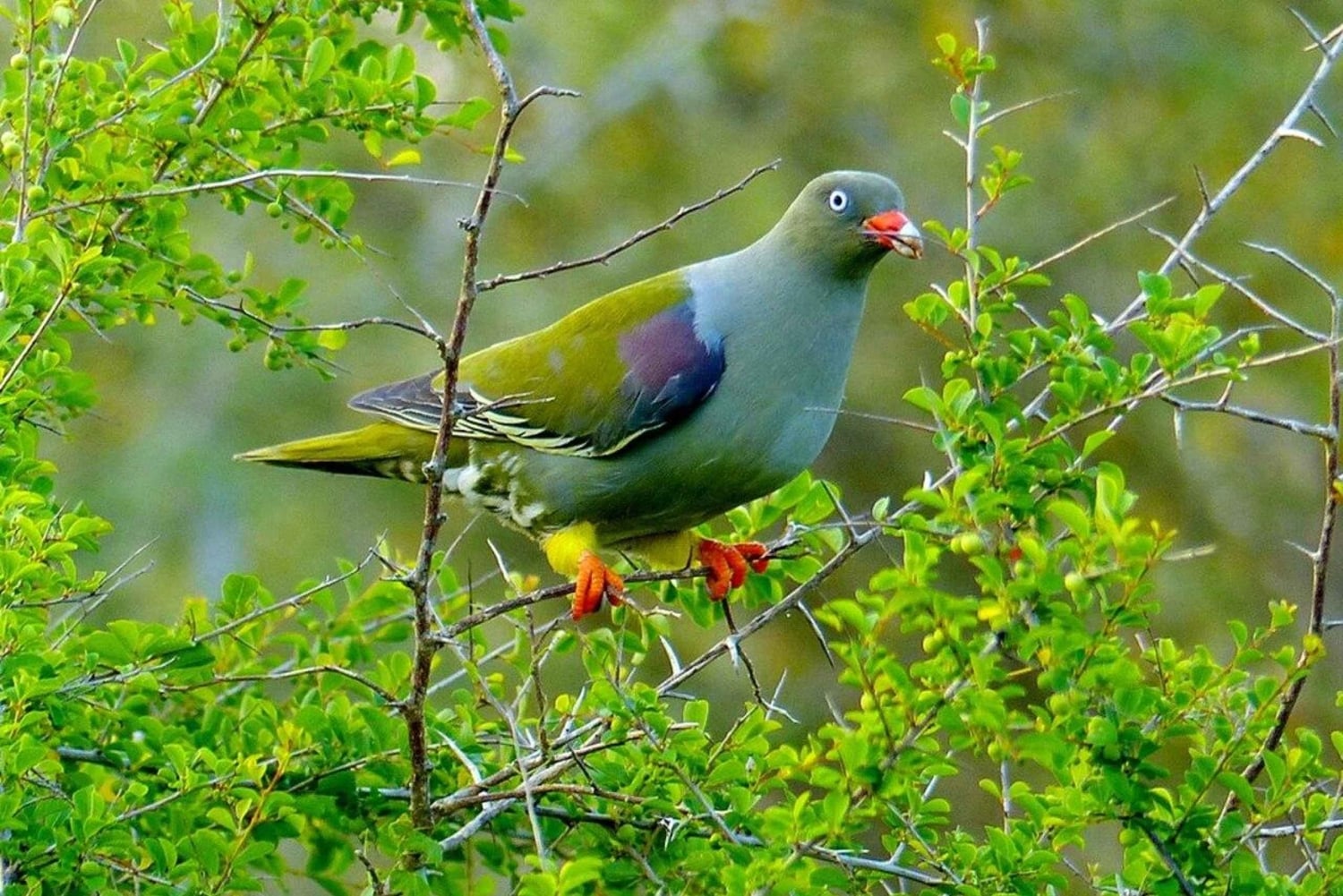
- Look for the Zanzibar green pigeon
- Look for other native and migratory bird species in Zanzibar
- Look for red colobus monkeys
Description
Experience the whole life of zanzibar birds which is endangered and endemic spices of birds which is migratory and natives to zanzibar by learning their characteristics life cycle and the whole avtity that they do also hearing different sound of birds when they singing during the early morning that make the beauty and reality of the nature and the wildlife
The tour will start early morning after arriving to the forest and stating going deeper to the forest by stating finding them because in morning is better because is the wake up time and you will sea alot of birds and you can hear there beautiful sound and here are some birds that you can see and more
The Crowned Hornbill (Lophoceros alboterminatus) is a medium-sized bird, typically measuring between 50 and 54 centimeters (20–21 inches) in length . It is characterized by its white belly and black back and wings. The tips of its long tail feathers are white, a feature that is conspicuous in flight. The eyes of the Crowned Hornbill are yellow, and its beak is red. A notable feature is the presence of a stocky casque on the upper mandible of the beak. In females, this casque is smaller than in males. The male also has sooty-brown plumage on its upperparts, head, chin, throat, and breast, with buff-edged flight feathers. A yellow line is present at the base of the bill, and the throat skin is dark.
The Zanzibar Fischer's Turaco shares many characteristics with the nominate subspecies but is geographically isolated to Zanzibar
Turacos are unique for possessing true green and red pigments in their feathers The green color comes from turacoverdin, and the red from turacin, both of which are copper-containing pigments produced within the bird's body These pigments are not merely structural colors but are intrinsic to the feathers, meaning they retain their vibrancy even if the feathers are crushed. The Zanzibar subspecies inhabits forest thickets, favoring the canopy and sub-canopy of mature fruiting trees. They are primarily frugivorous, with figs and berries being a significant part of their diet, supplemented by flower buds.
The Zanzibar green pigeon (Treron pembaensis), often referred to as the Zanzibar green pigeon due to its endemic location, is a small, stocky bird belonging to the family Columbidae. It measures approximately 25 cm in length] Its plumage is characterized by a greenish-grey head, neck, breast, and underparts. The upperparts, from the lower mantle to the rump, are olive-green, appearing brighter on the rump and uppertail-coverts, with a greyish wash elsewhere. A distinctive dark greyish-purple patch is visible on the shoulder, formed by the lesser wing-coverts..Yellowish edges on some of the greater wing-coverts create a stripe when the wing is folded. The undertail is blackish with a broad grey band near the tip, and the underwing is blackish-grey.The feet and tarsi are orange-yellow, while the bill and cere are dull red with a grey tipThe iris is bluish-grey,
Includes
Private tour guide
Government tax
Bottle of water
Hotel pickup and drop-off
Jozani forest entry fee
Excludes
Extra expense
Lunch
Important Information
- Check weather conditions, check your health condition
Easy cancellation
Cancel up to 24 hours in advance for a full refund